Saturday, May 5, 2018

Working on Our Projects

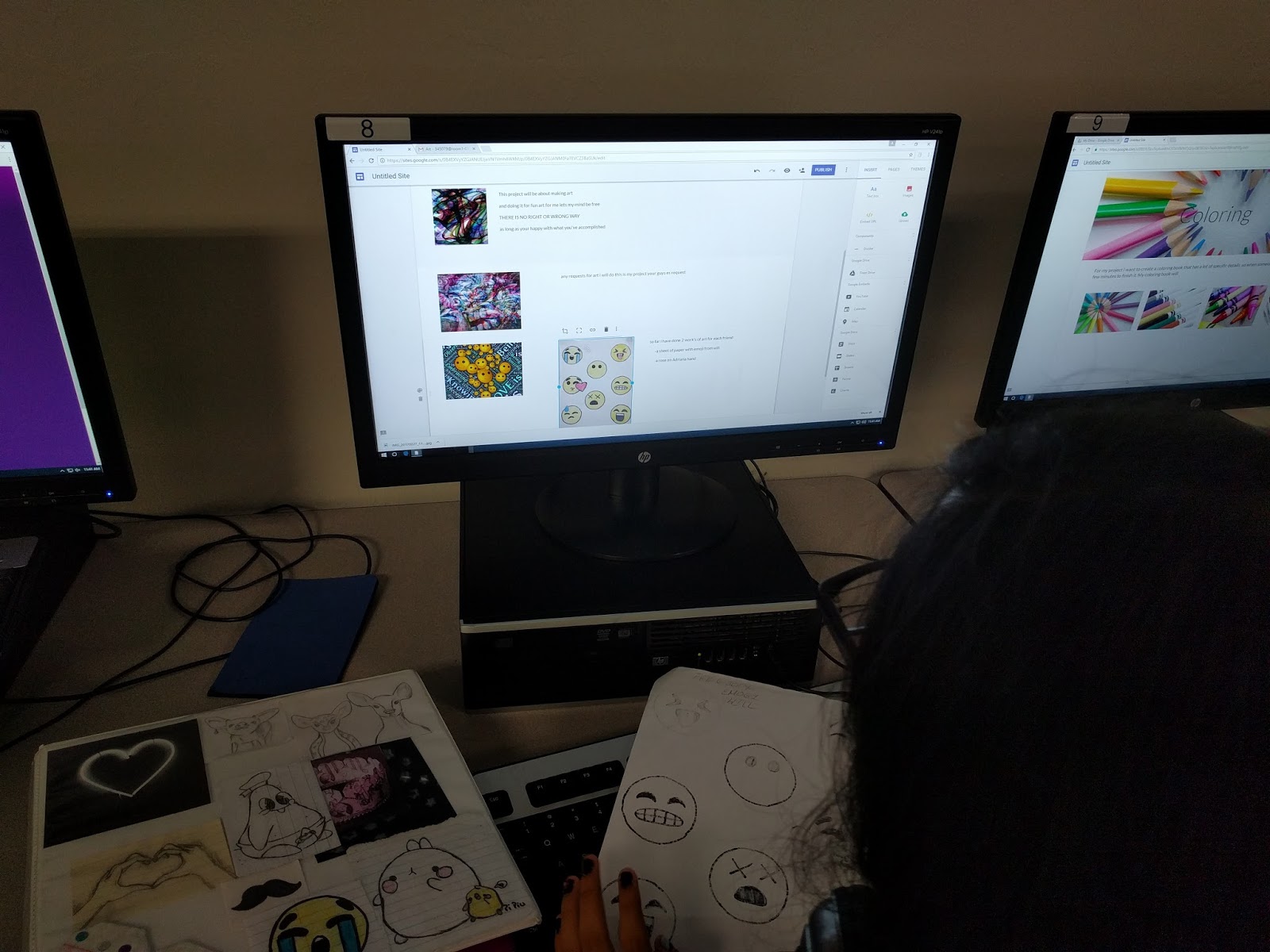
Some of our Genius Hour project work in class this week. Kids are hard at work making, innovating, creating, researching and designing.


Friday, April 27, 2018

Kicking off Genius Hour Projects Again!


It's always a fun time to kick off a new round of Genius Hour projects with kids. It's a time when we get to see kids really think about what they want to do, what talents they want to develop, what ideas they want to test out, and where their curiosities lie. As I talk to the kids about the possibilities, many kids think they already know what their project will be. Those kids, after talking for a bit, normally evolve the idea into a workable project or move on to what they really want to do. Some kids have no idea, but their brains are churning through many ideas searching for the one they really want to pursue. I love watching kids think, wonder, imagine, and think some more. 

Already kids have come to me with their project ideas. They will test them out over the next few days to see if those ideas have legs. If they do, then we will set those projects and they can pursue them with gusto. Others are sitting back, turning things over in their heads, making sure that they have the perfect idea. In class yesterday, there were squeals of delight as kids came up with a great project idea. Many kids want to develop their talents in art and music while others want to design and build. Still others have an invention or a hack in mind. 

I am eager to see how these projects take shape. Next week we will have our first indication of how things will go. There is no lack of energy. These kids are stoked! I love how Genius Hour brings out the thrill of learning for so many kids. It is unlike any schooling that they are used to. Genius Hour is more of a celebration of learning than anything else and I cannot wait for kids to get the full experience of it.

Friday, June 9, 2017

Genius Hour Reflections

Every year after final presentations, I have the kids write reflections about their learning and their projects. I think that reflection is a key part of learning and I want the kiddos to experience that learning as much as possible. Kids were to reflect on their project experience and also on themselves as learners. When I read the responses, I am always struck by how insightful and honest the kids are about their projects and themselves.

The one word that I read over and over in the reflections was "regret". Many of the kids regretted that they didn't put their best effort into their project experience. If they were to do it over again, they would do more, do better, do differently. In the back of my mind, I kept thinking, "Then why didn't you?" When I reflect on their words, I understand why. This Genius Hour experience is probably the first time in their lives that they participated in a project like this. Genius Hour projects are not teacher-directed projects with a list of "to-dos". In Genius Hour projects, kids have to do it all. They imagine the idea, do all of the preparations to complete the project, and then work on the project to completion. Kids have to do projects like this over and over to practice independent learning and decision-making. They will not be hugely successful the first time out of the box.

Nearly every student said that they wanted another shot at their Genius Hour project. They wanted to do better. They wanted to succeed. I explained to them the concept of "good failure" but so many kids at this age believe that any failure is bad failure. They have not made the paradigm shift yet. It will take constant practice in this type of learning environment in order for their learning to change. Evolving into problem-solving learners is what these kids need in order to thrive in high school, college, and the work force. It is also necessary in order to get the most out of their lives.


Many kids really did get it. They used the semester to discover their talents, how they learn best, and what their interests are. The kiddos got jazzed up about the possibilities of their project and their learning. It was awesome. Their reflections talked about being able to choose according to their interests and talents. They talked about their futures and what they may pursue or accomplish. They talked about next year and what they might do in their own time to further their project ideas. Some even talked about growing their project into a program here at school. These kids understood the idea of Genius Hour early and made the most of it. These kiddos can also serve as models for some of the others who struggled.

It is always a challenge to run a Genius Hour program in class. The struggle to get kids to unlearn and relearn is real. This type of learning is normally different from anything they have ever experienced before in school. We coach, we cheer, we encourage, and we help. We never direct. We never make the project ours by making decisions for the kids. They have to make the decisions; it is their project. We stick with the projects all semester and by the end, kids begin to understand the learning they are undertaking. They start to see that they can make their own decisions and design their own projects. They take command of their learning. That is our goal, and most of the time, whether the project itself succeeds or not, we reach that goal.

Saturday, May 27, 2017

Project Showcase!

On Wednesday, kids had the opportunity to present their projects to teachers and students at East Naples Middle School. All of the work that they had done over the course of the semester was about to pay off for them. Most of the kids made presentation boards similar to what professionals use during poster presentations at conferences. Each of the kids had a station so that others could come to their station, see their project, and ask questions. Some kids' projects were interactive (the kids who created video games had a large group playing those games), some had the kiddo's invented device on hand for others to explore, while others were service projects that intended to sign up participants for the cause.

We had quite a few classes of students come through the showcase as well as teachers and administrators. It was a good day for the kids. They got to see that their work really does make a difference and that others are interested in what they are doing. So many of the kids discovered that they really do have a voice. When projects got positive reactions, I could see the sense of accomplishment and validation on the kids' faces. Before going down to the multipurpose room to present, nearly every child wanted to back out. They did not want the attention and did not think that their projects were worthwhile. They were afraid to be embarrassed because they (and their projects) were not good enough. All year I have been pushing, coaching, and trying to convince these kids that they have something valuable to offer to the school and the world. 


Once we set up our presentations and classes started coming by to see the projects, the kids were all smiles. The attendees moved excitedly from one project to another. Some kids were more interested in learning how to podcast so they spent their entire time at that project. Some kids wanted to make music right there with Macy; she had a large audience the entire time. Other kids wanted to play Alfonso's and Jon's video games and so these two boys had a line of kids waiting their turn. The reaction of the other classes to the kiddos' projects surprised them. They did not expect that their work would be appreciated as much as it was. Now, some kiddos did not produce anything to show. However, they still got to experience vicariously the triumph of the others. Even the kiddos who did not produce learned a valuable lesson, that maybe their ideas and voice would be appreciated too if they only took the chance. 

In past years, at my other school, we had a smaller group of kids with two teachers running Genius Hour. For our final event, we conducted student TED talks in the auditorium. At my current school, because of scheduling, facilities, and staffing, I have had to tweak the program to fit our school. Every teachers has to do the same in order to get the most out of the kids. The variables that we have are time, resources, and facilities. It is up to us to adapt our Genius Hour programs to get the most out of our kids within the limitations of those three things. Our Genius Hour program fits our school. It looks different from our program of the past, and that is okay. It is the Genius Hour experience that is most important. Allowing kids the freedom to study or create something that THEY want is the most important thing we can do for kids. Any good Genius Hour program will be built around that premise. Days like Wednesday are so validating because most kiddos take advantage of the opportunity and do more than they thought they could. 

Sunday, April 2, 2017

Checking In

There is a lot of time between the high-stakes Genius Hour days. In previous years, we had Pitch Day in December, Idea Showcase in February, and Student TED Talks in May. There is a lot of work time between those events. We had to have some way to closely monitor the kids' work. While we check in with them each week, we wanted some formal way to have the kids reflect and curate the work that they have done so far. This year, because my teaching position is a bit different than my previous one, we had Pitch Day in December and we will have Idea Showcase act as our final presentation in May. That's a lot of time between high-stakes days. This week, because I need to see where the kids are in the process and some of what they have already produced, kids will complete Checkpoint Activity 1.

This activity is part evidence and part reflection. I assigned it last week so that the kids have two weeks to really dig in and assemble their work so far. This document is in the folder of documents linked on the right hand side of the blog. Kids will create a document and describe some of the work that they have done. They will not talk about what they plan to do. They will show what they have done. Their summary will be augmented by pictures and video of their work, or links to their work online. I want to see what they have been doing. If they are making something, I want to see the progress. If they are designing, I want to see it. Kids must show four elements of the project and the blog they are keeping acts as one element.

After the kids curate their work, they will reflect on what they have done and what they still have to do before presentations in May. The timing here is perfect. Kids still have almost two months to finish their projects so they should be focusing in more and more each day. Many kids have said, "But I am not finished with my project yet" or "I haven't done anything in a month". This activity helps them get back on track. It is not a high-stakes event like Pitch Day or Idea Showcase, but it is important enough to help them focus.

As usual, some of the projects are going beautifully. Kids are designing video games, upcycling clothes, creating cookbooks, writing novels, creating and marketing products, and helping local organizations. Some projects, on the other hand, have stalled. This is normal. Not everyone will have an amazing product. After all, we don't assess on the product; we assess on the learning that occurred during the project time. Any grade that the kids receive will be a combination of the project learning and their reflection after final presentations. Only then will we really see what the kids have learned for themselves.

Sunday, March 26, 2017

Game On!

When I introduced Genius Hour to the kids, several decided to do something with video games. They tossed ideas around including creating video games, blogging about video games, and reviewing video games. Jon decided that he wanted to create a video game. His work began by sifting through the numerous online video game makers until he found one that he liked. He explored several and decided that he would create his using one of his favorites. As he developed his game, and other students took a look at it, he became more encouraged to develop it. Now, whenever he has some spare time on a computer, he is working on his game.

Jon and Emmanuel troubleshoot an aspect of Jon's game

Other students offer advice and recommendations. Maybe a part of the game didn't provide enough challenge, or too much challenge. Maybe the order of progression should be tweaked. All of these are decisions that Jon must make in order to improve his game. The learning in Genius Hour is awesome because the burden of creating rests on the students. They are the ones making the decisions, testing those decisions, and further tweaking their product. Each student develops their own process for learning. This type of learning environment is completely individual.

Not only is Jon learning about video game making, he is also learning about marketing, troubleshooting, persistence, progression of thought, and grit. Jon is learning both content, process, and how to stand on his own two feet.

Sunday, March 5, 2017

Cool Projects!

As kids get deeper into their Genius Hour project work, they keep discovering new problems and new solutions to those problems. The most pressing problems for kids so far is accumulating the materials to build their project ideas. Some thought initially that they would be able to get their hands on material and have since had to change their approach. These are problems that they will solve in time. Other kiddos are moving right ahead.

Gladys decided to do a project centered around her artistic ability. We have a couple of kids showcasing their art, photography or music talents during our Genius Hour project time. Gladys is creating art and other students at school are buying it. At this point, she may build an Etsy site or continue to create and display at school, allowing kids to see and purchase her creations. Gladys is also creating specific designs for kids who request them. Art commissions in their infancy at ENMS :)


Carina loves animals and wanted to center her project around helping animals. She has been working on a project to become more involved with a local animal shelter and organize events to get other students involved as well. Carina is publicizing her project in school and was creating a graphic design using postermywall.com. She will produce these flyers to try to gin up interest at school. 


Rodolph is still working on the design of his mechanism that will guide a basketball player's wrist while shooting. Many beginning basketball players, he has noticed, do not have the proper form. His project, Flick That Wrist, will aid beginners in developing the proper form. Rodolph is ready to begin building the first iteration of his design. 


Things do not always go smoothly for the kids during Genius Hour work. They hit a lot of roadblocks. These roadblocks are learning opportunities. They find solutions to the problems that they encounter and become more confident in themselves as independent learners when they do. These kiddos are learning the benefits of persistence and grit. It will be one of the best things that they learn this year.

Sunday, February 19, 2017

Project Profiles

The kids are working on some very cool projects and two of three of those projects stood out to me this week. Jack is writing a novel. He was interested in writing a book because sometimes he has trouble finding books he likes to read. He is writing the kind of book that he would like to read. Jack has a decent amount of the book written and he works on his novel a couple times per week. He is beginning to develop the good habits of a writer, primarily to write every day.

This week, Jack decided that he wanted to design his book cover. I suggested Canva for this task. Canva is an excellent graphic design site that is relatively easy to use, free (or cheap), and as simple or complex as the user wants it to be. Within twenty minutes, Jack had the first iteration of his design. It will probably change. After all, this was his first attempt and he is learning what the program can do. As he learns the capabilities of the program, he will tinker and reinvent his book cover. This is a great example of a student's interest driving his learning.

Jack designing his book cover.

Both Brian and Robert are working on animation. Both wanted to learn how to do animation and create a video or short movie for their projects. Even though their projects are different, they are working together. They talk, experiment, bounce ideas off of each other, show each other things that they have discovered, and explore the world of animation. Both Robert and Brian have been watching YouTube videos that teach kids how to do the type of animation they want to do. 

Robert decided that the kind of animation he wanted to do required an Adobe product. He went through the research about the program but we could not get it for him (cost was prohibitive). He snooped around the apps already loaded on the computer we have in class and discovered a different Adobe product that, after some experimentation, will allow him to do the animation he wants to do. It is not the exact program he was looking for but it has the same capabilities. Once he discovered this program, both he and Brian were off, learning and creating animation. 

Brian introducing sound to his animation project.

Robert writing directions for his animated character.

All of this learning is student-driven and intensely interesting to them. That is the genius of Genius Hour. All kids can find projects that are personally fulfilling to them and learn at their own pace in their own way. For these kids, it a departure from their traditional schooling and while it took some getting used to, they are embracing this type of learning in a big way.

Sunday, February 5, 2017

Reflection: Our Genius Hour Blogs

Most teachers know that reflection is a key element of learning. We practice reflection in many ways. We blog, we engage on Twitter, we converse with other teachers, we read, we think and we wonder. We try to analyze what is going well and what needs adjustment. We try to figure out why something succeeded or failed and map out ways to do better next time. Reflection may very well be where most of the learning occurs. We teachers know that reflection is essential to developing a deep understanding of material and how we ourselves learn best.

Sometimes we overlook the reflection piece with our students. We are busy generating assignments so that they can perform and sometimes we don't allow enough time for kids to do their own analysis about their learning. Now, surely kiddos are not experts at reflection. They may not even know why reflection is important. "This is dumb. Can't we just do something else?" is a common refrain. Why would kids be so opposed to reflection? Well, for one thing, kids often don't know how to reflect. The way many schools work usually does not allow time for deep thinking about learning. We have material to cover. We cannot take time to think about what we are doing. Because of this rushed curriculum, kids are never given the opportunity to develop their reflective selves.

Kids have to learn to reflect on their learning just as we teachers did. We have to give them time and scaffold some activities for them so that they get the hang of it. With practice, they will develop the ability to analyze their work for the purpose of improving their learning. We have to give them time. One way we English teachers have been coaching reflection with kids is reader response. Kids spend time analyzing the books they are reading and also reflecting on their own reading skills and preferences. They take a long look at what they are doing for the purpose of improving their learning. That is the kind of reflection we want for our kids in all of their learning.

Our Genius Hour blogs are perfect for developing reflection skills in our students. They are in charge of their learning, making almost all of the decisions about their projects. Once a week, I ask them to write a blog post about their learning. What have they accomplished during the past week? What is the next step in their project? Is the project going the way they thought it would? Have they been surprised by the results of the decisions that they have made? Are they on track to complete their project? Given the work that they have done so far, what materials or resources do they need for the next step? All of these questions bounce around their brains. They have to take a long look at their learning. They have to reflect.

Our kids are making dozens of decisions about their projects each week. With each decision they make, a handful of new decisions appears on the horizon. They are figuring out that learning is a continuous process and that we are never really "finished" learning. One door leads to another and another. What we hope to accomplish with our blogs is to have kids take the first steps toward figuring out their talents and gifts and maybe take a look down the road to see how they can use these talents and gifts in their lives and in their work. We hope that they start planning some long-range goals. Some kids will discover new talents during our Genius Hour projects. That's what our projects are all about. We are learning a bit about a topic but we are learning a great deal about ourselves.

Sunday, January 22, 2017

Blogging Our Reflections

One of the most important parts of the Genius Hour journey is the reflection piece. Kids need to take time to assess what they are doing, how they are doing it, and make adjustments along the way. It is how we all learn. If we never stop to figure out what went wrong and what went right, then we never really understand our learning. Blogging is a powerful tool that helps kids figure out where they are going with their Genius Hour projects.

Now that our Genius Hour program is well underway, it is time to introduce the blogging piece. This week, we will create blogs. Kids will begin their blogs with an entry entitled "The Origin of the Idea" where they discuss how they came up with their Genius Hour idea. It is important for us to understand the "why" behind the project because it is the "why" that keeps the program alive. If the project is really a personal passion, the project will succeed and the student will thrive. If the "why" is weak, then the project will likely run out of steam. During our idea-generation stage in the fall, we talked a lot about the "why" and many kiddos changed their project ideas because they had a weak reason for doing the project. Most have really dug down to find their passion and now are working on their projects. They may not know how to go about it but they are figuring it out.

Each week, the kiddos will post at least once to their blogs, updating us on their progress toward their goals. That post is a chance for kids to really take a look at what they are doing and formulate a plan to tackle "what's next?".  Most of our kiddos have never blogged before so I show them examples of blog posts from the kids who have gone before them. On the right hand side of this blog there is a list of "Must Read Student Blogs" that changes every year. We still have last year's blogs up because this year's kiddos have not started blogging yet. Those blogs will change soon. When we change out the blogs, we create a page to house all of the blogs from last year. We never want to lose any student's work. It is that important to us.

During class, I stress to the kids that they are capable, independent learners. None of these kiddos is used to this type of learning situation because it has so rarely happened to them before. They have to gain confidence in themselves and know that their ideas, skills and talents matter. They need to see in themselves what we see in them. They need to raise their expectations of themselves. Genius Hour gives them a great opportunity to do something amazing. These projects can change kids' self-perceptions. They can learn more about themselves and see themselves as "in charge" of their learning. They will also be more apt to take on independent projects in the future whether or not those projects occur at school. We are cultivating independent learners who seek to develop their passions. We are cultivating genius.

Sunday, December 18, 2016

Pitch Day 2016

Pitch Day is one of my favorite days of the school year. It is the day when the kiddos pitch their Genius Hour ideas and explain what they hope to accomplish with their project. We hear all kinds of ideas, many of which I had never thought a 13-year-old would be capable of doing. I learned long a go that kids will blow away our expectations when they are given the opportunity to learn what they want. Indeed, we have seen projects that college students would have trouble completing. It all comes down to the students' passions. What is it that motivates them? That passion is what we as teachers must tap into in order to get the most out of our kiddos. Genius Hour does just that.


The presentations overall were pretty good. In the past, the students presented only to a committee of 3-4 adults. This year, because of logistics, the kids pitched to two adults and their classmates. Because students were in the room, it was a bit less formal than in the past. However, that informality did not detract from the ideas that the kids presented. Project ideas ranged from service projects to projects dealing with the arts. Some kids wanted to build and some wanted to code. We have animators, YouTubers and writers. 

Jack, who goes spear fishing every month with his family, wants to design a new propulsion system for a spear gun. He believes that the current system is too difficult and things he can innovate a new way for spear guns to work. Each month when he is fishing with his family, he will test the iterations of his project to see what is working and what needs to be tweaked more. He will post pictures and video to his blog so we can see his progress. 

Halle is an artist, musician and skater. She believes that the price of musical instruments and other items that kids want are way too expensive for the average kid. Her dream is to open a storefront where young artisans can make instruments, create art, make skateboards and other items that they will sell at a low cost to kids. She talked about creating a business plan and raising funds. That is ambitious. Halle may start with an Etsy store while she is working on her bigger dream. 

Destiny had the idea to create jeans that change colors. She will have to learn the science behind that technology and how to work with denim. She may need to learn how to sew. She is fascinated with the idea of customized and personalized clothing and has already talked to Halle about selling her jeans in Halle's store. 

Joaquin is all about shoes. He has lots of shoes and treats them like trophies. His idea is to create a spray that will prevent the shoes from getting dirty without compromising the integrity of the shoe. He knows that there are similar products on the market but no spray is good for all shoes. His will be.

Macy is a musician. She can play music just by hearing it and she plays multiple instruments. She also sings. Her idea is to develop and showcase her talent and create a YouTube channel to document her story. Music is her passion and this project will be a great outlet for her. 

These are a few of the projects that the kids will be doing. In this blog over the next five months, I will be highlighting more of the projects that are in process. As always, kids will be keeping their own blogs to tell the stories of their learning. This promises to be a great crop of Genius Hour projects and I'm excited to see the progress that these kiddos make as the year goes on. 

Sunday, December 11, 2016

"I Can't Wait!"

Every day, we begin class with a writing prompt. Kids write quietly to the prompt for ten minutes. Often, kids will want to write on another topic. I welcome those decisions. After all, the writing is theirs and as long as they are writing, I'm happy. Last week, one student used the writing prompt time to discuss his Genius Hour project. "I can't wait!" his journal began. "I am so excited to do my project!"

I love when kids are jazzed about doing their work in class. I have talked to them incessantly about owning their work, making decisions in class that personalize the work that they do, and getting more out of the classroom experience because of those decisions. The whole idea behind Genius Hour is to give kids time and space to learn the things that they want to learn, the things that excite them, the things that will make their lives more rewarding. We probably will not have any scientific breakthroughs (though you never know) and we may not have the next Edison or Tesla, but each child has chosen a project that will bring them personal fulfillment along with skills and knowledge along the way.

I have seen the preliminary ideas and I'm very excited for many of them. Some kiddos are going to soar from the get-go. Some kiddos are going to have to tweak their ideas; they just don't know it yet. That is part of the learning process. Many kids have already changed their ideas. When they do, they approach me like they are disappointing me. The conversation that we have is interesting because I tell them that they should never settle on an idea about which they have doubts. Normally they are stunned. These kids are still getting used to the idea that they have the decision-making power for their Genius Hour projects. This power is something that they have to get used to and they will. It is my job to get them comfortable with being in charge of their learning. This evolution occurs every year. In March, kids will tell me, "Yesterday, I changed a part of my project because I ran into a dead end." Right now, however, they don't see themselves with that kind of control. They'll get there sooner or later and I can't wait until they do!

Sunday, December 4, 2016

Creating the Pitch Presentations

It is important for kids to learn presentation skills. They don't get nearly enough opportunities to refine those skills in school. Kids are deathly afraid of public speaking as are most adults. In order to get kids more comfortable with presenting their ideas, they must do it often. Pitch Day is the perfect opportunity to work on those skills. Our Genius Hour Pitch Day is on December 13. While it will not be a life and death situation, it is a high stakes event. The very fact that kids will be presenting their own ideas to adults and other students increases the degree of difficulty.

One thing that these kids need is confidence. I am a firm believer that learners who are confident learn more because they are more willing to take risks. These kids are becoming more confident and that is a beautiful thing to see. We have had several class activities during which kids share their ideas with peers so they have already had their ideas validated by other students. Now they have to crystallize their ideas into a 3-5 minute presentation that speaks to the origin of the idea, the plan and the desired result. These kiddos will be ready.

To that end, we spent a block in the computer lab creating our visuals for Pitch Day. Our conversation before beginning was to make sure that the visual was engaging and to limit the words on each slide. After all, we are going to want each student to talk to us, not read slides to us. The art of presentation is to use the visual as a springboard for conversation and not lean on it like a crutch.

The skills that kids will work on while creating and delivering these presentations are many and they are just as important as the curricular skills that we teach them. Proper social interaction, creativity, public speaking, appropriate audience behavior, organization, and showcasing important information are all skills that they will use at some point in their lives outside of school. We have to focus on them as much as we do reading and writing. Our kids will be better for it.

Sunday, November 20, 2016

Accessing Our Creative Genius

Every week at the beginning of Genius Hour, I show the kids two or three videos of amazing ideas. I call this little time slot "Creative Genius". It is a good time to show kids that people are out there thinking up simple, elegant solutions to everyday problems. First they see a problem, then they try to find a solution, testing each iteration of the solution along the way. Finally, they have a viable solution to the problem. This is what Genius Hour is all about. I want kids to access their talents and abilities to create, innovate and solve problems.

Often kids don't think they can make their mark on the world. After all, they're just kids. By showing them all of these ideas, I try to broaden their knowledge base and stretch their imagination. Maybe they hadn't thought of the Power Puff Lamp or Shoes that Grow, but they can think of many other solutions to problems. I want kids to aspire for more than they thought they could achieve. I want them to perceive themselves as inventors, creators, and innovators. They have to change the way they see themselves in order to be confident enough to take that leap. Thus far in school, most kids believe that they are the passive recipients of knowledge. We have to give kids the opportunity to try, fail and try again.

Over the past few years, I have seen kids gain confidence in themselves during their Genius Hour experience. Their perceptions change. They are no longer just students; they are also writers, techies, YouTubers, inventors, chefs, and builders. Kids realize that if they were able to dazzle with their Genius Hour project, they can do anything. This kind of learning is difficult, much more difficult than traditional school learning. Not only do kids have to complete the assignment, they also have to construct the assignment.

In a few weeks, we will conduct Pitch Day, a chance for kids to share their ideas and goals with others. I am incredibly excited to watch as kids take their first step toward independent learning. They will crash. They will fail. They will get frustrated. Doesn't that sound like the learning we do as adults? They will also try again. They will succeed. They will have those "A-ha!" moments. They will be so interested in the projects that they created because they are based on the kids' passions that they won't every quit. This is a long journey that we are on and we are only at the beginning.

Sunday, November 13, 2016

Preparing for "The Pitch"

Over the last few years, Melissa and I have learned that we have to give kids lots of time to come up with their project ideas. One year we tried to rush things, giving kids only a couple of weeks to think. Well, that didn't work very well; we had a lot of kids change projects because while they were doing their project, they discovered their real idea. Kids naturally have a lot of starts and stops. Some will latch onto an idea before we introduce Genius Hour. Some will struggle for weeks. We have to accommodate both kinds of learners. So we give time. We give time for kids to converse, wonder, think and imagine. We ask kids to start researching their project idea because after their initial research, kids will either confirm that their idea is awesome or realize that their idea isn't for them.

Over the last few weeks, we have been doing a lot of idea-generating activities. These activities are important because kids need exposure to many ideas and they also need time to reflect and talk to others. Through these conversations and reflections, they begin to flesh out their ideas. This is what learning is all about, attempting new things and reflecting on those attempts. Do all of the kids have ideas at this point? No. Do all of the kids have some idea of the talents they want to use for their projects? Nearly all do.

In a few weeks, kids will pitch their ideas. In the past, because of our situation, we were able to have pitch committees of adults who saw these pitches, like in the television show Shark Tank. Because of my current situation, I don't have those resources at the ready so we will do things differently. My goal is to have Pitch Day work a bit differently than the past but not too differently. I may be able to get another set of adult eyes to help me form the Pitch Committee. I may not. The structure of my new school may not allow the time resource for that adult. That's okay. Each student will give a 3-5 minute pitch presentation. They may use any technology they would like to help us visualize their goal. They will present to our class and any other adults I can get in the room during that time.

Feedback is important for the kids. The committee has always given the students feedback on style, substance, and presentation. This year, kids will still get feedback. Some of that feedback will come from me, some will come from other adults in the room and some will come from the other students. Now, most of our kiddos have not had the opportunity to make many presentations so this is a skill that is under development. We will model a good presentation, we will help kids prepare and we watch them excel. There is nothing more rewarding than seeing our students accomplish something that they didn't think they could do. They get such a boost in confidence and begin to see themselves differently. They begin to see that they are in charge of their own learning and that they have more control over their learning than anyone else.

Not only are kids learning the content that their projects will require, but they are also learning secondary and tertiary skills. Kids will learn to prepare, to speak in front of an audience, to walk with confidence, to create an effective visual, to offer and accept feedback. Sometimes these skills may make up the foundation of the kids' careers later in life. By including a variety of skills for the kids to learn, we are making sure that kids see their potential as learners. Through completing their Genius Hour projects, we think that the kids will fulfill this potential.

Sunday, November 6, 2016

The Eureka Moment!

Our kids are still working on coming up with great ideas for their Genius Hour projects. When I surveyed the kiddos the other day, about half knew what they wanted to do while the other half was still searching. Melissa and I learned years ago that the idea is the key to the projects. If a kiddo is cavalier about the idea, then the project will flop. The project must center around an idea that the student is passionate about. We're looking for that "Eureka Moment". For instance, a few students told me that their idea this year was "fundraising". When I asked what they would be raising funds for, they had no idea. Their project did not have a purpose. We talked about the purpose behind the idea and I think that these kids understood. They may or may not continue along the fundraising track. They will consider the purpose of their project more carefully now.

Since the Bad Idea Factory, we have done a couple of exercises to help kids dig down to their real interests and passions. One survey asks kids questions like, "What are a few things that you have always wanted to do physically that you have not been able to do yet?" and "What are a few things that you have always wanted to learn about but have not had the opportunity yet?" When kids think in these terms, about things they'd like to learn or accomplish, instead of an idea for a project, then the idea they come up with should be more meaningful to them. 

This past week, we did a sharing exercise. Kids grouped up and interviewed each other about their project idea. I was hoping that when the kiddos talked about their ideas, there would be conversation around those ideas and brainstorming would occur. Sharing ideas often leads to more and better ideas. I think that happened in several cases during this exercise. I also had the kids browse the Bad Idea Factory. There are so many good ideas, or ideas that could lead to good ideas, on the wall. I had kids write down all of the ideas that they liked. Needless to say, kids turned in lists that features about a half dozen ideas each. The purpose of our idea exploration session was to expose kids to all kinds of ideas. Who knows, maybe an idea that they talk about or see will lead them to the idea that will ultimately become their project. We know that will only happen if we talk about ideas, share ideas and expose kids to as many ideas as possible. Only through a deep dig into each child's passions combined with exposure to lots of ideas will kids ever reach their "Eureka Moment". 

Sunday, October 30, 2016

The Bad Idea Factory

In previous years, Melissa had always done The Bad Idea Factory in her classroom. This year, we did it a bit differently. The huge whiteboard in my room often becomes a place for conversation among students. Sometimes when the kiddos walk in, there is a question on the board and they put answers up over the course of the week. A few weeks ago, we turned that space into our Wonder Wall and the kids had a lot of questions to post. The space has become communal and conversational. The Bad Idea Factory was no different.

I ran things just like Melissa did in the past. I introduced the concept of ideas germinating and morphing into other ideas. We talked about how someone can take one idea and come up with something completely different because their mind was able to move from Point A to Point D. Kids understand this and they have good ideas. Often the problem is that we don't ever ask them what their ideas are. Genius Hour depends on the kids' ideas. Those ideas are the entire content of the Genius Hour program.


"Think of things you're good at, you'd like to make, you'd like to invent, problems you would like to solve," I told the kiddos. "Write them on the slips of paper and post them to the board." They did. The ideas kept coming and coming. Now, sometimes we have kids who are a wealth of ideas; they cannot get enough slips of paper. Others come up with one or two and "can't think of anything else". We push those kids just a bit more to really dig down, read the ideas that others are posting, and try to come up with more. Often they do. When we are done posting, the kids take a few minutes to browse the board. There are a lot of laughs and a lot of "that's cool" comments. 

As the days went by after we did the Bad Idea Factory, many of the kids realized that those were not bad ideas on the board. They were really good ideas. We talked about that in class, how things that we initially think are bad ideas are, upon reflection, pretty good ideas after all. We talked about how self-editing can be devastating because if we don't even put forth an idea, we'll never know if it can work. One girl, Destiny, even took it upon herself to change the word "bad" to "good". Now, on our whiteboard wall, we have The Good Idea Factory. 

Monday, October 24, 2016

Podcast: Harmonized Learning Episode 56


In this episode, we talk about parting ways at the end of last year, our new jobs and Don's Genius Hour program (with Melissa as consultant) at East Naples Middle School in Naples, FL. You can subscribe to this podcast on iTunes.

Saturday, October 15, 2016

We Are Underway!

Since August 15, I have been mentioning 20% Time and Genius Hour to my kiddos in the hopes that it would raise questions in their minds about what we will be doing. They asked and they kept asking. Finally, last week, we kicked off our program. I tweaked the presentation that Melissa and I used to do in order to fit my new situation and spent a full 90 minutes talking to the kiddos about the potential of this project. It was obvious from our conversation that very few of my kiddos have experience with anything like this. That is to be expected. In schools, we normally don't give kids voice and choice. We try but the curriculum and pacing guide usually rule the day and so we must "cover" material. Genius Hour is the opposite of that. In Genius Hour, kids get a chance to really delve into a topic of their own choosing, construct a project around the learning that they want to do and make almost all of the learning decisions along the way.

During our kickoff, a few kids immediately had ideas. Most did not. Part of the challenge for kids in a Genius Hour setting is coming up with a good idea. In a classroom setting, the teacher normally tells the kids what they will be learning so kids are trained to be passive receivers of the assignments. For most, Genius Hour is the first time in their lives that they will be active learners who will drive the project ideas. This change will be frustrating and painful for most of the kids but they will be so much better off when they emerge on the other side. Genius Hour is amazing more for how we train the students to become lifelong learners than for the actual projects that are completed. 

Many kids had "How..." questions. I just kept saying, "Trust in the process. We just go one step at a time." The program that Melissa and I designed and implemented is a deliberate process-oriented program that will help the kids develop one step at a time. Students will figure it out and take off at different times this year. That is awesome. The kids who are more confident in their learning will soar early while the kids who are more teacher-dependent will take longer to take flight. Because each student is a different learner, each student gets exactly what they need in order to become more independent. 

Explaining all of this to the kids in addition to watching a couple of TED Talks (Ken Robinson's "Are Schools Killing Creativity" and Daniel Pink's "The Puzzle of Motivation") had kids' heads spinning. That is great! I want the kiddos to use their brains to make sense of what they saw and heard. I want them to unlearn many of the traditional school behaviors that have been ingrained in them and try something new. For many, this is a scary proposition but we learn the most when we're uncomfortable. These kiddos were uncomfortable!

Sunday, September 25, 2016

It's On Again!

For the last several years, my teaching partner, Melissa Hellwig, and I have implemented a pure 20% Time program with our kids in Webster Groves. The program took off and soon we found ourselves immersed in all things 20% Time even to the point of conducting PD sessions and conference presentations. At the end of last year, with my move to Florida and Melissa's new job as an assistant principal, we thought that our journey together was over. Well, not just yet.

In a week or so, I will introduce Genius Hour to my kids at East Naples Middle School in the hopes that they will achieve as much success as the kids in Webster Groves. I have a good feeling that they will. Melissa has agreed to consult on our program. She will help me tweak Genius Hour to my new kids, school and situation. I am ecstatic because I know that so many of the improvements that we have made to the program over the past few years are the result of conversation and "thinking out loud". We have a synergy that really seems to make us better thinkers and idea generators.

When we talk to teachers about the differences between Genius Hour and 20% Time, we note the difference in project time. 20% Time, we say, is a year-long investigative project. Genius Hour projects are usually for a shorter term. This year, my first year at East Naples, we will do Genius Hour projects. I still have not worked out the logistics to make the kind of program that the two of us, working together, we able to carve out in Webster Groves. I am taking our advice by starting small and expanding over time.

The logistics are tricky. This will be a long-distance collaboration and fortunately we are techie enough to make it work. We still plan to tweak the program together, podcast occasionally together and even Skype Melissa in for the high-stakes days (Pitch Day, Idea Showcase, etc). This collaboration will be new for us and interesting as an educational experiment. Needless to say, we are stoked to be working and creating together once again.

I have already tweaked our Genius Hour blog, Harmonized Learning, to reflect some of the changes. Please follow along to see our new journey this year. My kiddos have been gradually accepting the fact that they can make many of their learning decisions. As they grow into more independent learners, I am confident that these kids will buy into the program and showcase their genius in ways that surprise us all. Every year we are "wow'd" by the learning that kids do. I know that this year will be no different.